More than 3,000 years of history
Ancient Origins
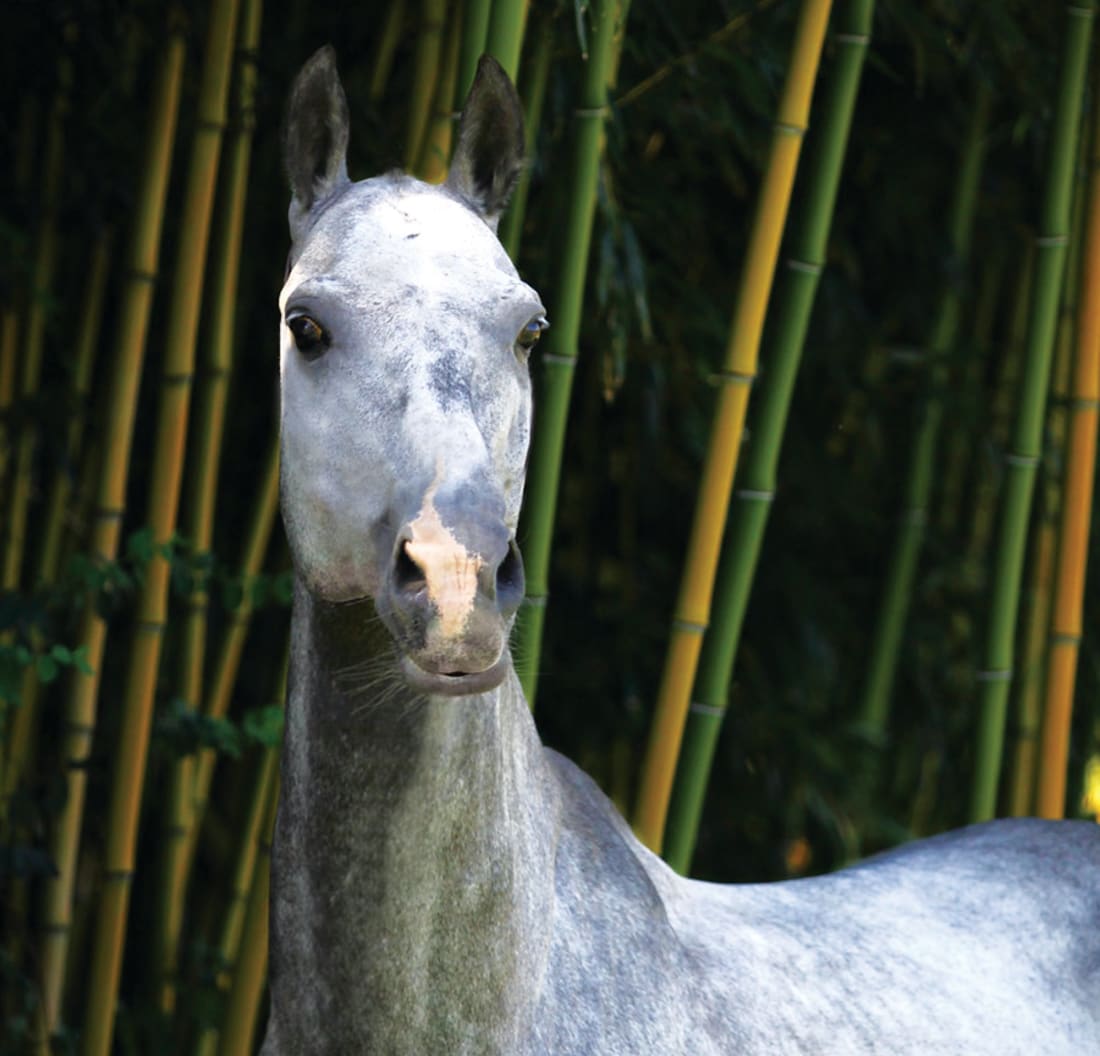
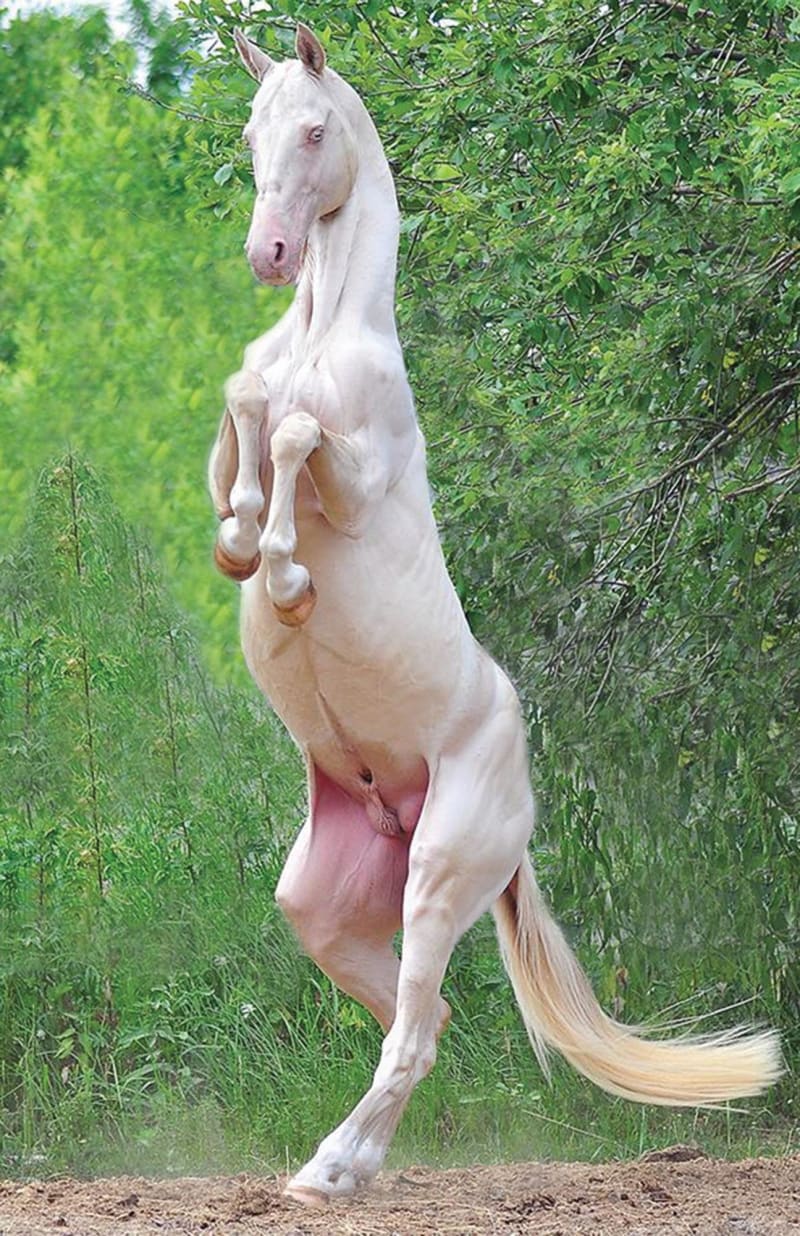
More than three thousand years ago… in the Central Asian steppes of what is now Turkmenistan, a horse unlike no other emerged. They evolved alongside the nomadic peoples and alfalfa itself, in a place nestled deep in the Karakum desert between the ancient Oxus River valley and the Kopet Dag mountains. Here, like the eolian hollows of the region, these horses took on the shape of the wind and the glow of unending sun. It is believed they were born of the snake, cheetah, and eagle, with adaptive thin skin, metallic coat, exotic grace and legendary stamina. They were a horse of many names, due to their far-reaching mythos and dispersion over time. They became the Akhal-Teke.
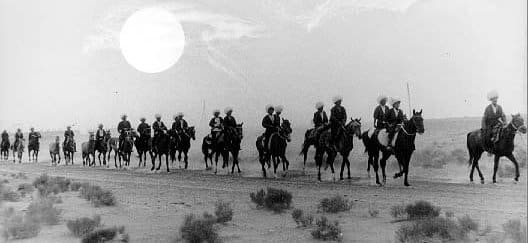
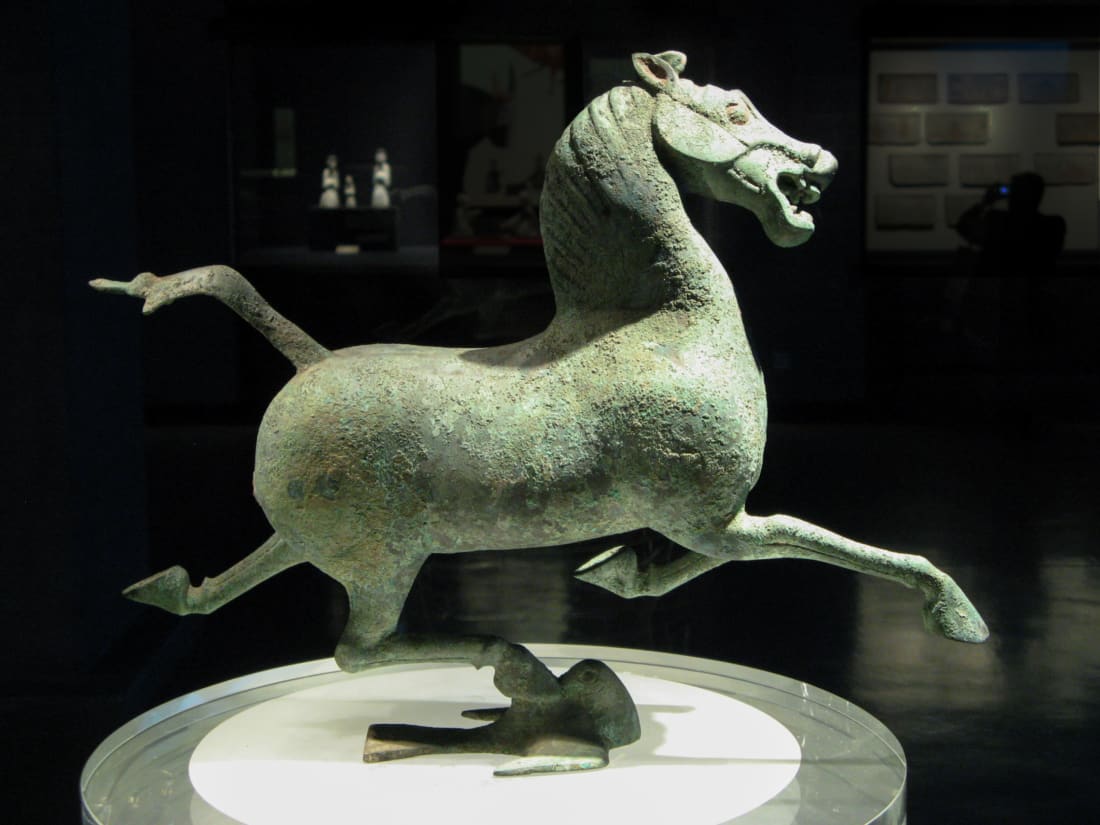
Their ancient predecessors were called the Blood Sweating Horses of Fergana, the Heavenly Horses, by China (Davis, 2007). The horses’ long, slender ears also reminded the ancients of dragons, earning them the additional Chinese nickname of Soulon, or “vegetarian dragon” (Davis, 2007). These were highly sought after royal mounts, sometimes referred to as, or stock for, the Nisean horses of Persia (Alchetron, 2017). The Romans, Chinese, Scythians, and other great empires of the early world are all believed to have fought and traded for the “Heavenly Argamak”, a term for the breed that is still used by hippologists today (Ahal-Teke.org, 2015). Over time they more familiarly became known as the Turkomans, Turkmen, or Turk horse, for the Turkic tribes of their homeland. The Akhal-Teke lived closely with Central Asian nomadic tribes, sharing their tent and subsisting on meager rations high in protein. The region’s resources and migratory way of life did not support large herds, so the breed existed in pockets across the steppes. Their treasured speed and endurance made them essential for transportation and warfare.
The Akhal-Teke horse was so coveted they became the target in the first war over horses in 104 BCE and 102 BCE, deemed the War of the Heavenly Horses. The war was fought between the Chinese Han Dynasty and the Persian Empire, and in victory, the prize of “T’ien ma” or Heavenly Horses allowed China to grow a strong cavalry (Zhao, 2019). In fact, their height, swiftness, and fierce loyalty proved repeatedly to be a decisive factor in the power of nomadic tribes and early empire cavalries. For this reason, the Turk horse became widely revered.
Alexander of Macedonia’s famous mount, Bucephalus, is even believed to be a predecessor of the modern Akhal-Teke. During Alexander’s invasion of Persia, he “[demanded] a tribute of thousands of Persian horses” (Davis, 2007). In 480 BCE, King Xerxes proved the great racing prowess of Persian horses by beating the decorated horses of Thessalonia. The blood of the two was allowed to mix after he conquered the region in order to improve the Thessalonian horse (CompetitiveHorse.com, 2003). Indeed, the Akhal-Teke was brought into racing stock throughout the ancient world. It’s no wonder why later, in the development of the early Thoroughbred, they were sought after and imported for breeding. Famous foundational Turk horses for the Thoroughbred include Darcy’s Yellow Turk, Helmsley Turk, and the well-known Byerley Turk.
DNA and historical studies also suggest that many horses imported as “Arabs” or “Arabians” were actually Turks (Lesté-Lasserre, 2020), such as the Godolphin Arabian who has recently been confirmed to be of Turkoman origin rather than Arabian (Wallner et al., 2017). The Akhal-Teke was used throughout history to not only improve outside stock in crossbreeding but may have been essential in development of almost all other breeds. Today, the breed even aids in the recreation of the Nez Perce horse, is used to create an impressive spectrum of competitive sporthorses, and remains present as globally important genetic root stock. It is said that “the Akhal-Teke horse ‘possesses the last drop of that valuable blood from which all the breeds of well-bred horses have been developed’” (MAAK, 2001). One reason it is so important that we preserve them.
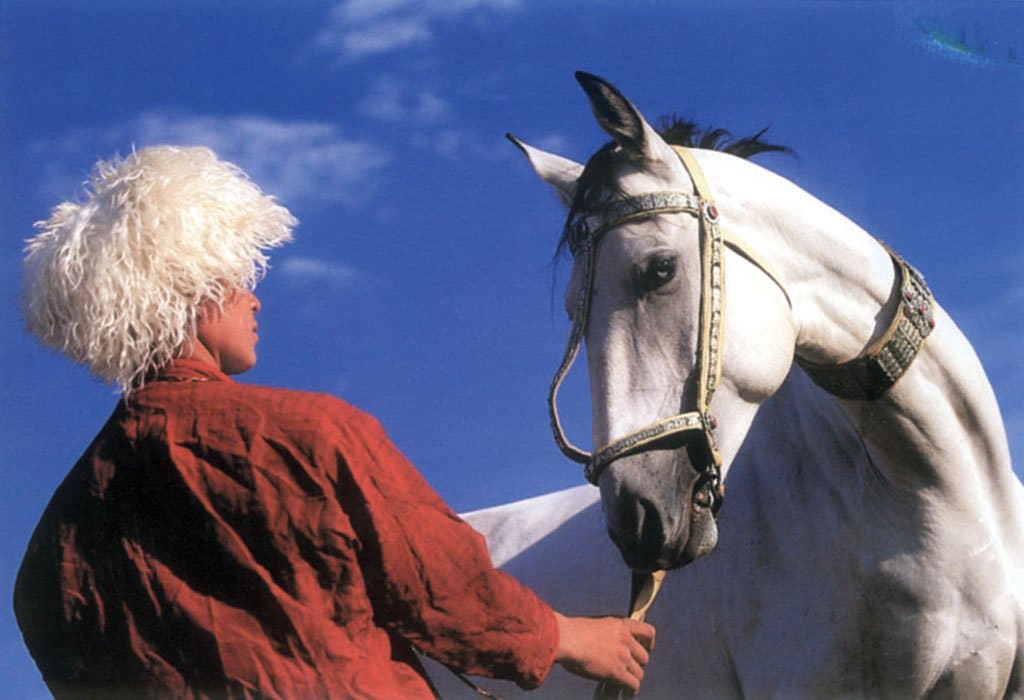
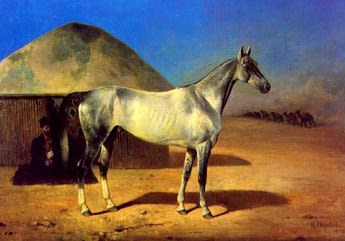
Within early nomadic groups and Turkmen tribes, the Akhal-Teke lived closely with its people. At times this meant they had to subsist on very little, occasionally surviving with the substitution of raw eggs and barley for protein, but fed well on their native lands’ lucerne they were praised as some of the tallest and leanest horses of the ancient world. Turkmens would cover and honor these horses with woven camel or goat hair and carpet decorations, as well as elaborate handcrafted metal and leather jewelry–a practice that is recognized by UNESCO’s Intangible Cultural Heritage List. Historically, the degree a Teke was decorated reflected their value and accomplishments. These decorations are seen in historic paintings, depictions, and descriptions, and now replicated with more contemporary techniques outside Turkmenistan.
The Turkoman horses gained their modern name, the Akhal-Teke, after Russia took over Turkmenia in 1881, “combining the name of the Teke Turkmen tribe and the Akhal oasis in the foothills of the Kopet-Dag mountains” (MAAK, 2001). The blood of the Turkmen horses in this area had been kept meticulously pure, making them living history and particularly valuable. With extraordinary efforts by Russian and Turkmen stud farms, attention was restored to the Akhal-Teke and careful breeding management saved it from the brink of extinction.
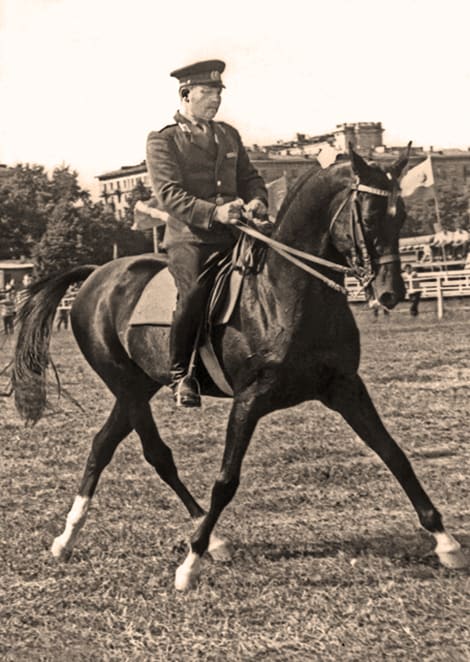
The Russians also used the breed to develop the Don, the Orlov Trotter, and Russian Thoroughbred lines (MAAK, 2001). It’s been speculated that Peter the Great’s favorite mare, Lisette, had Akhal-Teke qualities, perhaps showing early Russian interest in the breed (Ahal-Teke.org, 2015). Though they are not native to Russia, Akhal-Tekes have become a prominent favorite, even a status symbol, and most of their population is found in Russia today. In Turkmenistan, the Akhal-Teke became the national emblem and are proudly kept by the presidential stables and as valued family members in private farms. The Akhal-Teke also became the primary racehorse breed in Turkmenistan, and the second most popular racing breed in Russia.
Read more about the Akhal-Teke’s modern history post-1880s below.